
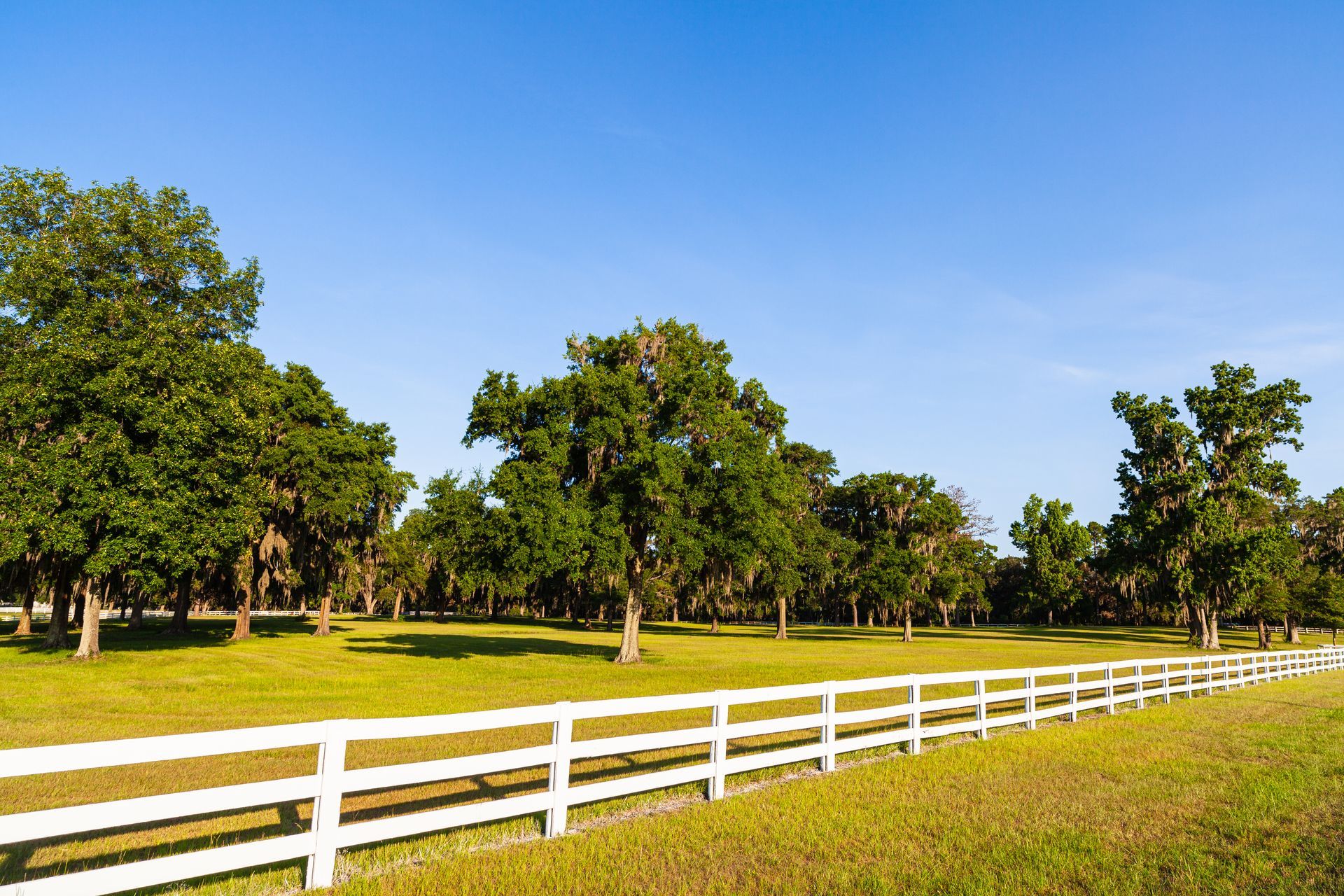
Boundaries Built for Acreage and Livestock
Ranch Style Fencing in Cleveland for landowners containing livestock and marking property lines across open terrain
Large properties and agricultural land require fence systems that cover extensive perimeters while withstanding constant animal pressure and exposure to weather extremes. Ranch style fencing uses widely spaced posts connected by multiple horizontal rails or wire strands, creating a barrier strong enough to contain cattle, horses, or goats without the material costs of solid panel construction. LNC Fencing designs and installs ranch fencing throughout Cleveland and surrounding rural areas where properties range from a few acres to several hundred, accounting for terrain variations, soil types, and the specific livestock being managed.
Posts are set deeper than residential fencing to handle the lateral force from large animals leaning or rubbing against rails, and corner posts receive additional bracing to resist the tension from wire or cable runs. Rail materials include treated wood, coated wire, or pipe depending on budget and intended use. Spacing between rails is adjusted based on animal size—smaller livestock require closer rail placement to prevent escape.
Arrange a site evaluation to determine post spacing, rail configuration, and material selection based on your acreage and livestock management needs.
What Ranch Fencing Actually Accomplishes
The fence system establishes clear property boundaries visible from a distance, prevents livestock from wandering onto roadways or neighboring land, and divides pastures for rotational grazing. Posts and rails are installed to follow terrain contours without creating gaps at low points where animals might slip under, and gates are positioned at access points for equipment or feed delivery. The materials selected resist the prolonged UV exposure and moisture cycles typical of unshaded rural installations.
Once completed, you'll see a continuous perimeter that defines grazing areas, keeps animals within designated pastures, and eliminates the need for constant monitoring along unfenced boundary lines. The structure remains stable under animal contact, and rails stay secure without sagging or detaching from posts. Gates open wide enough for tractors or trailers to pass through without requiring repeated backing and repositioning.
LNC Fencing also handles fence repair after storm damage or when aging posts rot below ground level. Sections can be replaced or reinforced without rebuilding the entire perimeter, and additional gates can be added as property use changes. The company provides guidance on appropriate rail height and spacing for different livestock species to ensure containment effectiveness.
Answers to Frequent Service Questions
Ranch fencing projects involve decisions about materials, layout, and long-term durability across large land areas common in rural Cleveland.
What post spacing works best for ranch fencing on acreage?
Posts are typically placed eight to twelve feet apart for wood rail fencing, while wire or cable systems can extend post spacing to sixteen feet or more depending on wire tension and terrain flatness.
How does soil type in this area affect fence installation?
The clay-heavy soils common around Cleveland hold posts firmly once concrete sets, but the soil expands and contracts with moisture changes, so posts must be set below the movement zone to prevent heaving or shifting over time.
Can ranch fencing handle both livestock containment and property line marking?
Yes, the same fence system serves both purposes by positioning it along surveyed boundaries and sizing rails or wire spacing to contain the smallest livestock on the property.
What rail material lasts longest in continuous outdoor exposure?
Pressure-treated wood rails resist rot for fifteen to twenty years, while coated steel pipe or cable lasts longer but costs more per linear foot and requires different fastening methods.
When should landowners plan fence installation around livestock schedules?
Installation is easier when animals are rotated to distant pastures, which allows equipment access and prevents livestock from interfering with post setting or rail attachment during construction.
LNC Fencing conducts on-site assessments that review terrain, measure perimeter distances, and recommend rail configurations suited to your livestock and land use. Reach LNC Fencing at (936) 314-3657 to discuss your ranch fencing project and receive a detailed cost estimate based on actual site conditions.